How to Learn a Board Game Fast
A practical guide on how to learn a board game fast. Set up the pieces, choose a rulebook or video, practice alone and keep useful notes before game night.
By the Tavernly team ·
A new game arrives on Thursday. Your group meets on Saturday, and you're still trying to work out what happens after you draw a card. If you're wondering how to learn a board game before everyone arrives, set it up, read with the pieces in front of you, and try a practice round alone. Use a short video if you need to see the game moving. Save your questions for that practice session instead of carrying them into game night.
How to learn a board game fast
The short answer
Learn enough to run a legal turn and explain how the game ends. Then test that understanding with the components before you sit down with other players.
Use this five-step route when you want to learn board game rules fast:
- Follow the setup page. Lay out a supported beginner setup and identify the pieces as you place them.
- Get the outline. Find the goal, the end condition and the shape of a turn. Watch a short overview if the book leaves those unclear.
- Read through the rules. Move the components when an example calls for it, and mark anything you can't explain yet.
- Run a practice round. Act for each seat, paying costs and resolving effects. Look up questions as they appear.
- Leave yourself a reference. Note the steps you missed and the pages that answer your questions.
Stop preparing when you can complete an ordinary round without guessing and find the answers to unusual cases. You can learn better choices through play.
Should you read the rulebook or watch a video first?
Choose the starting point that answers your immediate problem. If the book introduces unfamiliar terms before showing what you do, a short overview can give you a picture of the game. Watch for what moves, what gets spent and when control passes to the next player. Then read the book for the details.
Start with the rulebook when it's short and clearly organized. You can pause at an example, check a symbol and return to a paragraph without hunting through a recording. If you can describe the goal and a turn after one pass, skip the long video and try moving the pieces.
Prefer the publisher's own how-to-play video when one is available. An independent explanation can contain errors or cover a different edition. Check the edition, expansions and corrections before following along. Even an official overview can leave out exceptions, so use the written rules to settle a precise question.
Look on the publisher's game page for those materials. For example, a publisher's site may put rules downloads and teaching videos together, while reference aids come in the box. Availability varies by game; don't assume every title has the same support.
Why set up the game before you read the rules?
Our recommendation is to get the game onto a table before the detailed reading. Reading in bed can leave you recognizing words without knowing which pile or board space they refer to. With the layout in front of you, you can point to the supply, the discard pile and your own resources as each appears in the book.
Use the component list to check what's there, then follow the setup diagram. If something seems missing, check whether it's inside another packet or reserved for an expansion before substituting a piece. Use the suggested first-game arrangement if the publisher provides one.
As you read a sample action, perform it. Take the token from the correct place and put the spent resource where it belongs. If the next paragraph says to refill something, do that too. Keep these demonstration moves separate from the starting position so you can restore it afterward.
How does a solo practice round work?
To learn a board game alone for a multiplayer evening, we recommend playing the multiplayer rules yourself. Set up for two players if the game supports that count; otherwise use a supported count. Give each seat its own cards and resources.
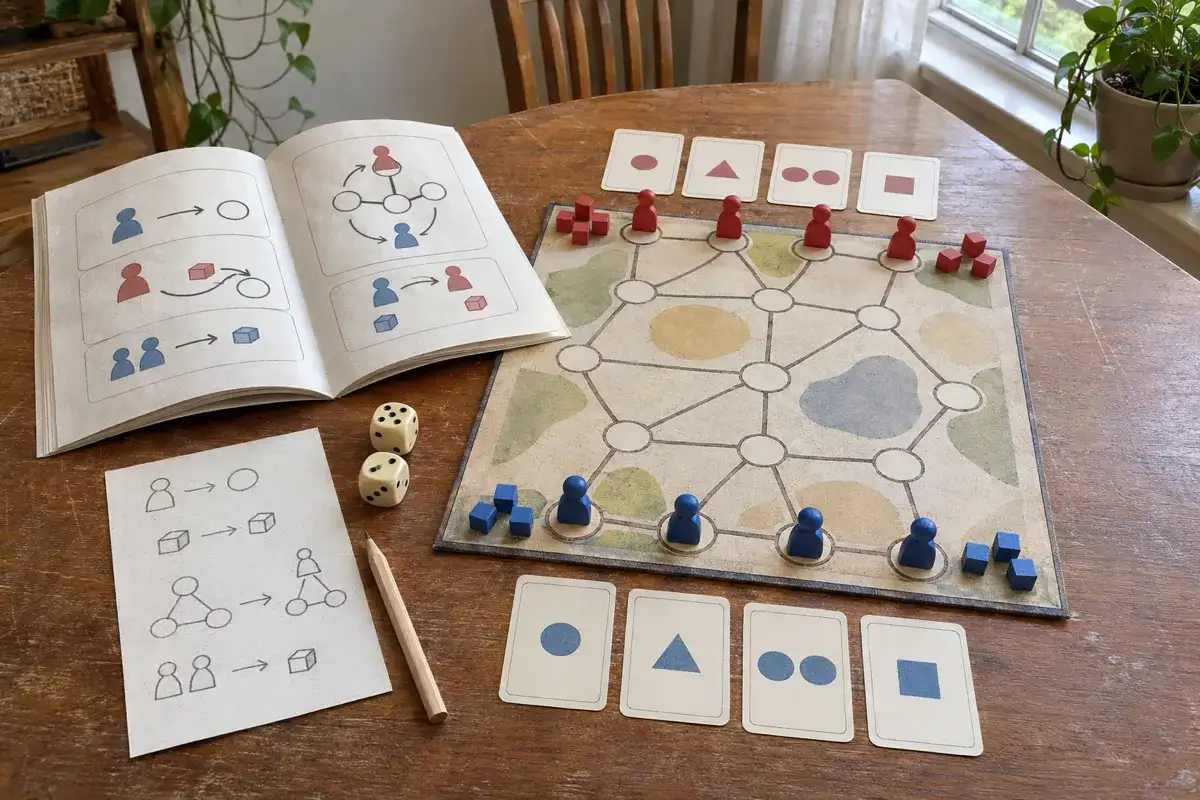
Don't switch to the dedicated solo mode for this exercise. It may introduce opponent procedures or scoring changes that your group won't use. Your aim here is to rehearse the version you're bringing to the table.
Take a turn for each seat and narrate the actions. Say what you're choosing, what makes it legal and what happens afterward. Suppose you reach for a card and realize you don't know whether to pay before drawing. Stop there and find the timing rule. That question is easy to miss while simply reading.
Try an action you haven't used yet, then carry out the round-end steps. Also test final scoring on a clearly invented end position, following the book. You don't have to play an entire match to discover that you misunderstood when something scores.
Once the sequence makes sense, reset and begin again. Keep practice reversible: don't consume campaign materials or reveal sealed content just to test a turn. Self-play also can't reproduce bluffing or hidden information properly; use it to check procedures, then learn those interactions with other players.
How do you remember the rules?
Keep the rulebook at the table. You need to know where to look when a question comes up; memorizing every exception isn't a useful entry requirement.
Make a one-page turn summary in your own words, checked against the book. Write down what actually tripped you up. Copying the whole manual gives you another long document to search.
| What you got wrong in practice | What to put on your summary |
|---|---|
| You ended the turn before resolving an effect. | The turn sequence, with that step in place. |
| You mixed up a cost and a reward. | When payment happens, plus the rulebook page. |
| You couldn't interpret a symbol. | Its meaning beside a sketch of the symbol. |
Use the included player aid if there is one, and keep a relevant printed FAQ in the box. Check that any downloaded aid matches your edition. A turn card is handy for routine reminders, but it won't necessarily answer a dispute about an unusual interaction.
What should you expect from your first game?
Tell the table it's a learning game before starting. Give yourself permission to make a merely reasonable move and see what follows. If you spend every turn searching for the winning plan, you'll have less attention left for understanding the sequence.
Agree to correct rules mistakes going forward rather than rewinding the game. If you discover that you've been collecting a reward at the wrong time, explain the correct timing and use it from there. If the mistake makes continuation impractical, agree together whether to restart. Avoid trying to reconstruct every earlier decision.
After play, read the book again with the session in mind. Look for the rule behind a surprising result or a pause at the table. Keep deeper strategy for your second and third plays, once you can follow what's happening. Use a strategy video to understand why choices work together, rather than copying an opening regardless of the position.
When you're ready to lead the next session, use our guide to teach it to the table.
What if the rulebook is hard to read?
Try putting it down for the evening and returning the next day. Treat that as a practical reset, with no promise that sleep will solve a confusing paragraph. On the second read, work through the specific example that stopped you.
If you need board game rules explained in motion, watch a full playthrough long enough to see the troublesome transition. Pause before the next move and predict what should happen, then compare. A playthrough shows the sequence; it can still contain mistakes, so check disagreements against the book and the publisher's FAQ.
An official FAQ can clarify a disputed interaction or identify a correction. Look under the game's rules or downloads section. Some publishers don't provide one for every game, and an FAQ usually assumes you already know the basics.
If unfamiliar mechanisms are piling up, choose a lighter game before tackling this one again. Practice the particular mechanism that's confusing you, such as placing workers to select actions or adding cards to a deck. Familiarity gives you a starting point, but still check the new game's timing and restrictions rather than importing rules from another box.
Can you learn a game on a screen?
Look for a digital version with an interactive tutorial and bot opponents when you want to try choices as they're introduced. Automatic move checking can reduce bookkeeping, but pay attention to what the software does between your turns. If you can't explain why a resource changed, you haven't learned that step yet.
Tavernly has an optional “Learn by playing” guided lesson in every game, guest play with no sign-up, and bots that can fill seats. Those lessons teach its own games. Read your physical copy's rules separately before transferring what you've learned to the table.
Not every tabletop game has a digital tutorial, and an online version may use a different edition or configuration. Check before practicing. For a traditional card-game starting point, our Euchre guide explains the version available here.
FAQ
How long does it take to learn a new board game?
There's no useful time limit that fits every game. Judge readiness by what you can do: set up correctly, resolve a turn, handle the round ending and explain the finish. If you're still guessing at those steps, allow another practice session or pick something you already know for the evening.
Do I need to read every rule before I start?
For private practice, you can begin with the setup and basic turn, then consult later sections as needed. Before a group session, read the rules for the configuration you'll use, including scoring and restrictions that affect early choices. If the publisher supplies a learning scenario, follow its instructions about what to introduce later.
Is it fine to learn while playing?
Yes, when everyone knows that's the plan and is comfortable pausing. Check that the group has time for an exploratory session before opening a complicated game. If guests expect you to know it already, prepare first or tell them the plan has changed. Don't quietly turn a social evening into an unexpected rules study.
How do I stop forgetting rules between plays?
Before packing up, leave a note about the question that caused the longest pause and where you found the answer. Next time, review that note and rehearse the transition you forgot before inviting everyone to sit down. Update the note when it stops helping; you don't need a growing collection of reminders you already understand.