How to Teach a Board Game to New Players
By the Tavernly team ·
You unbox a new game on the afternoon of game night and read the rulebook with a snack in your hand. By the time guests arrive, you know a few terms but aren't sure how a turn ends. To teach new players comfortably, practice before they arrive, explain the goal and a turn, then bring in details as they matter. This guide shows you how to teach a board game without making a board game night for beginners feel like a class.
How do you teach a board game to new players?
The short answer
- Learn the game yourself and choose it for the guests who are coming.
- Explain how to win and what happens on a turn, then demonstrate one.
- Start playing, add rules when needed, and agree how you'll fix mistakes.
Give everyone enough information to make an informed first choice. Keep the rulebook close for questions. Treat the first game as a chance to learn together.
What should you do before game night?
Find out who is coming and what kind of evening they want before choosing the game. For a mixed group meeting to catch up, try a light party or gateway game with a clear goal. Save a heavy strategy game for a night when everyone wants to spend time learning it. If you offer a choice, give guests a short list you are ready to teach.
The person bringing the game should take responsibility for preparation. Open the box, set it up, and read the rules before the group arrives. Our advice is to play a few practice turns by yourself, acting for several imaginary players. Move the pieces and pay the costs for each seat. That exposes gaps in your understanding while there is still time to check the book.
Practice the first couple of minutes of your explanation out loud. Can you say how the game ends, who wins, and what a player does on a turn? If not, go back to those parts. You don't need to memorize every unusual card, but you should know where to find its answer.
Which approach fits your group?
| Group type | How to prepare | How to teach |
|---|---|---|
| Casual guests who want to catch up | Choose a light game and learn it yourself. | Watch a short overview together if useful, then give a brief recap and play. |
| Hobby or competitive group happy to prepare | Send a short video in advance and remind guests the night before. | Recap the goal and turn, then check questions before starting. |
| A group with a hesitant newcomer | Choose a manageable game and offer a practice turn. | Offer a willing partner, and let the newcomer make decisions. |
Sending a video ahead gives willing guests a head start. It can also feel like homework to someone who came for a relaxed evening. Watching together while eating or before setup puts everyone in the same place, though it takes time from play. Either way, plan to explain the essentials at the table.
In what order should you explain the rules?
When you teach board game rules, we recommend starting with the destination and then showing the route. Here's an order you can use for a board game rules explanation:
- State the goal and how to win. Give one sentence: for example, “Collect the most points by the end of the final round.” Explain what triggers the end if that affects decisions.
- Describe the shape of a turn. Say what a player can choose, what they pay or collect, and how their turn finishes. Leave rare cases for later.
- Point to the pieces. Show where the choices, costs and scores appear on the table. Put a card or token in someone's hand so the words have something to refer to.
- Add exceptions in context. Say “one more thing, only when this happens” as a new phase or situation arrives. Plan two or three short pauses rather than a second lecture.
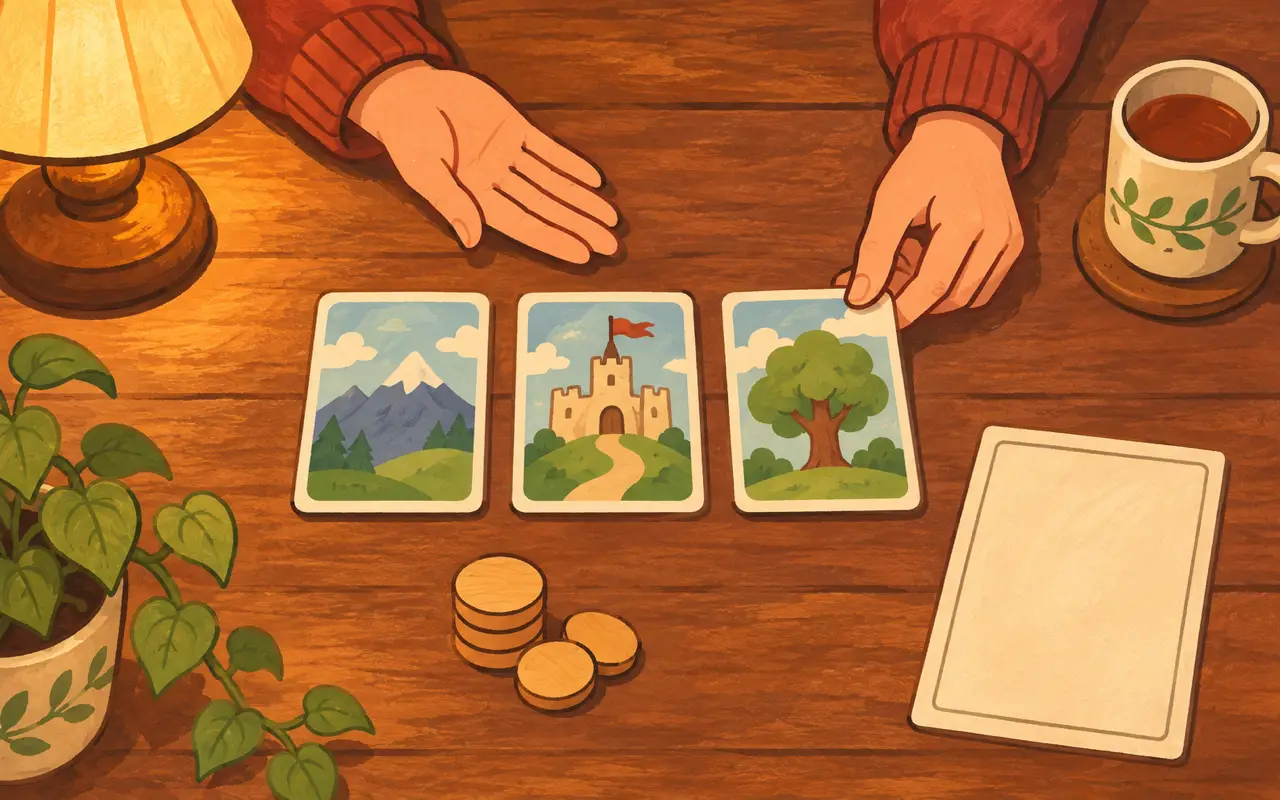
Show a demonstration turn with cards face up. Say what you are choosing, make the move, and show its result. Reset anything the demonstration changed before the real game starts, unless the group agrees that it counts. Ask a guest to describe one available move in their own words; clarify the rule if they are unsure.
Flag a rule that changes an early decision with “this one matters.” For example, if a resource cannot be carried into the next round, show where it is spent before anyone takes a turn. Don't hold back a decisive restriction simply because it is an exception.
Give each player a reference card if the game includes one, or make a one-page aid with the turn order and common actions. Check it against the rulebook. Some publishers include aids in the box; they are specific to that game and won't settle every unusual case. Reading the entire book aloud can leave a casual group waiting through details they cannot yet place. Keep it available instead.
Should you use the rulebook or a rules video?
Use both when a useful video is available. Our suggested order is a short overview for the feel of a turn, followed by a read through the rulebook for setup, scoring and details. Then keep the book at the table for lookups. If reading first suits you better, start there and use the video to see the pieces in motion.
A video can skip an exception or make a mistake, so compare any doubtful instruction with the rules for your edition. A book can be easier to search for a specific situation than a video timeline, though layouts vary. Check the publisher's official FAQ or corrections when available, especially if the printed rules seem ambiguous. Match the edition and expansion before applying an answer.
For an example of what to look for, one publisher's product page includes embedded videos, a link to game rules, and a list of the teaching guide and player aids in its paid physical game. Those materials apply to that game, not automatically to yours. The page is available without buying the game; check the publisher of your own copy for its resources.
How do you keep new players involved?
First, ask whether your guest wants to play or would rather just be there. Someone who wants company may prefer to keep score, handle the bank, or hang out nearby. Offer without assigning a job or making them explain their choice.
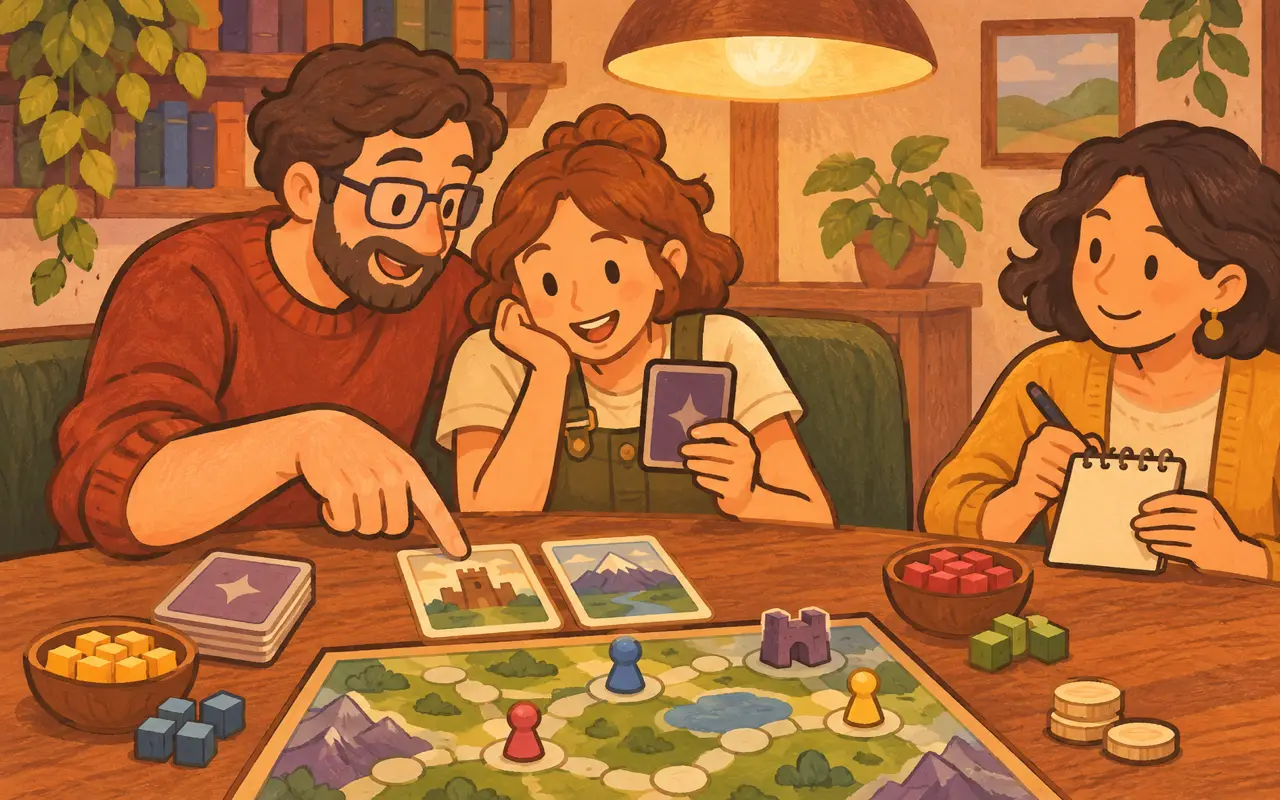
If a newcomer wants help, offer to pair them with an experienced player for the first game. A coach can ask, “This card or that one?” and explain whether a proposed move is legal. Let the learner choose, and notice a good move when it happens. Once they feel ready, they can take a seat on their own.
Coaching has a trade-off. It gives someone a person to ask, but a coach who corrects every legal move takes the decisions away. Let small strategic mistakes stand. In games with hidden information or irreversible moves, agree on how much advice is welcome before a card is revealed or a piece is committed. A learner who prefers to experiment alone can ask for a rules check when needed.
Choose a first game that fits the time and attention the group has. If everyone enjoyed it, offer a second play before switching: use the first to learn and the next to compete with a better grasp of the choices. Suggest that players consider their next move while others take theirs, while staying attentive to changes on the table.
For a solo introduction before hosting, Tavernly offers an optional “Learn by playing” tutorial in each game and bots that can fill seats at a private table. It teaches Tavernly's own game, so check the physical game's rules separately.
What should you do when someone gets a rule wrong?
Before starting, propose a simple agreement: if the group discovers a rules mistake, correct it going forward instead of rewinding. Choose one rule keeper to find the relevant passage. For a question that can wait, make a temporary ruling and check it at the end of the round so the current turn can finish.
Suppose you realize in round four that you taught the upkeep step incorrectly. Stop when you find the answer, explain the correction, apologize once, and use the right rule from then on. Don't make the player who benefited the target of blame. If the mistake makes the game impossible to continue fairly, the group can agree to restart or make a different repair; say what will happen before anyone resumes.
Keep the book open to the passage if a ruling remains disputed. A clear temporary decision lets everyone make their next move under the same understanding.
What can a first-time guest do to learn faster?
Tell your host you're new instead of pretending you know the game. Ask what is planned and whether there is a short video or rules overview they recommend. Watching ahead can help, but tell the host if you won't have time so they can plan an explanation.
Put your phone away during the rules and ask when something is unclear. Try a choice on your turn rather than waiting for the perfect move. While others play, think about what you might do next and be ready to change plans if the table changes.
Read the mood, too. A relaxed group may enjoy conversation between moves; a competitive group may prefer more focus. Follow the pace without rushing someone who needs a question answered. You can always ask for a quick rules reminder.
FAQ
How long should a rules explanation take?
There is no fixed length that fits every game. Explain enough for a player to understand the goal, make a legal first turn and recognize any rule that affects an early choice. For a more involved game, allow longer and pause again when a new phase begins. If the group looks lost, demonstrate a turn before adding details.
Should I let new players take back moves?
Agree before play. For a learning game, allowing a takeback before new information is revealed can give a beginner room to understand a choice. Once hidden cards are exposed or other players have acted, a reversal may affect everyone. Ask the table before changing the position, and apply the same agreement to each player.
What if my guests do not want to watch a video first?
Don't make advance viewing a condition of a casual invitation. Prepare the game yourself, then offer a short video together at the table or while everyone eats. If the group would rather begin, explain the goal and turn with the pieces and demonstrate a move. Give a recap even if you do watch together.
Which games are good to teach first?
Choose a game that fits the guests and the evening, with a goal you can explain clearly and a play time the group wants. A familiar game can be a comfortable start: consider Mexican Train or Euchre, depending on the group's interests and player count. Check the rules and seats for your chosen version.