Board Game Night for Beginners: Bring and Play
By the Tavernly team ·
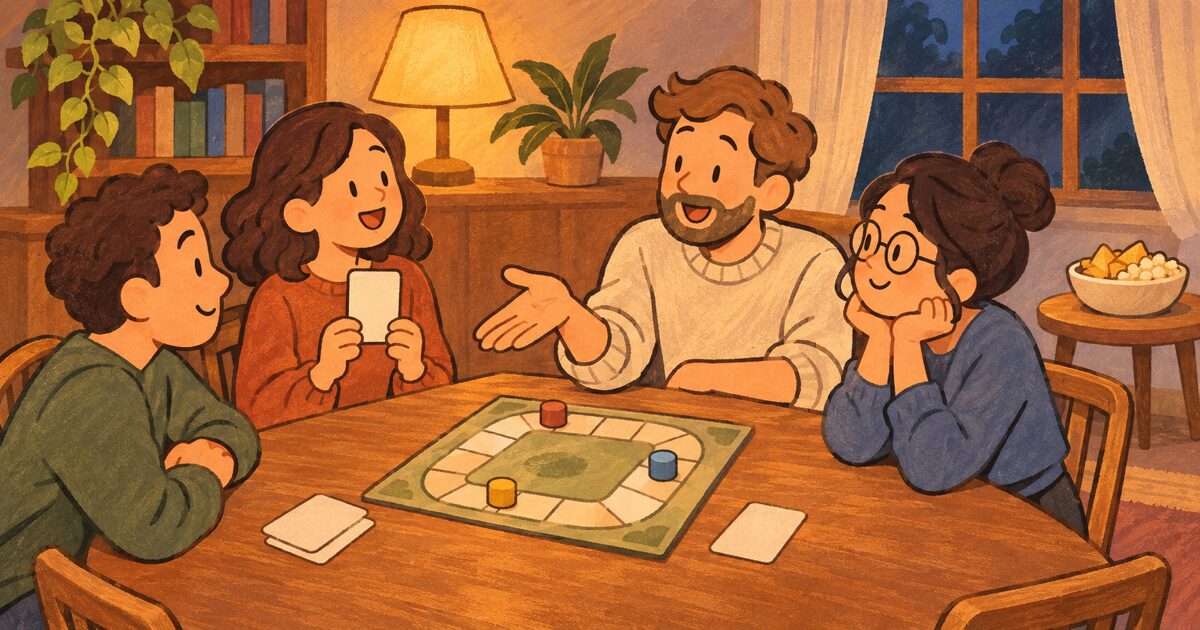
You've accepted an invitation, and now you're wondering whether everyone else knows rules you've never heard of. A board game night for beginners goes more comfortably when you tell the host what you've played, ask what to bring and arrive ready to learn. If you're hosting, choose something you can explain clearly and leave room to play it again.
What should you expect at a first board game night?
The short answer
- As a guest, expect to ask questions and make imperfect moves.
- As a host, make the first choice manageable and offer a replay.
- Agree on the evening's pace before committing to a long game.
For guests: you don't need a good score on your first visit. Your useful contribution is attention: listen to the explanation, try a move and say when you're lost.
Expect an explanation of the goal, a demonstration of a turn and questions during play. You don't have to understand every possible strategy before starting. You do need to know what you're trying to achieve and which moves are legal.
For hosts: ask what your guest enjoys doing with friends. Someone who likes wordplay and conversation needs a different starting point from someone asking for a quiet puzzle. Treat those preferences as information when choosing the evening's game.
What should a beginner do before the night?
Tell the host honestly where you're starting. If they mention a game you've never heard of, say so. Pretending you know it creates an awkward moment when they skip the explanation you need. “I played a light card game years ago, but I'll need the rules” gives them something useful to work with.
Ask which games are planned and whether there's a short rules video from the publisher or a rules channel. Watch a single suitable overview if you have time. Look for the goal and the shape of a turn; leave advanced strategy alone. Check that the video matches the edition being played. A video can miss details, and the host should still explain the game at the table.
Ask what the host likes to play, too. “What do you enjoy teaching?” opens a conversation and helps you understand their invitation. If you want mostly social time, tell them before they prepare a demanding strategy game.
What should you bring?
For what to bring to a game night, start with the host's food rules. Ask about allergies and whether eating happens at the playing table or elsewhere.
Choose something easy to serve without greasy or powdery fingers. Bite-sized food eaten with a fork is an option; keep napkins nearby and finish eating before handling cards. Publisher hosting guidance recommends avoiding greasy fingers and sticky fingerprints on pieces. Food can still spill, so a separate snack surface is a better place for dips and open drinks.
Don't buy a surprise game for an experienced host. You don't yet know their collection, tastes or storage space. Offer to contribute food instead. A small accessory makes sense only when you know exactly what they want; ask before spending money on something that must fit particular components.
Bring willingness to try an unfamiliar activity. You can dislike a game and still give it your attention while you work out whether it suits you.
How should you act at the table?
Good board game night etiquette begins during the teach. Put your phone away unless you're using it for the rules or an access need. Let the teacher finish a point, then ask a specific question: “Can I take either card?” is easier to answer than “I don't understand any of this.”
While other players act, consider your next move and a backup. When your turn arrives, check what changed and choose. You will need extra thinking time while learning. Ask for a rules reminder when needed, but avoid reopening every possible strategy before each move.
Read the room during the opening turns. At a casual table, allow conversation and imperfect choices. At a competitive table, make an honest effort to win and respect the agreed rules. If you can't tell, ask whether this is a relaxed learning game or a focused match. Laughing off every decision can frustrate a serious group; treating a relaxed evening like a tournament can strain it too.
Win without explaining how obvious your opponents' mistakes were. Lose without dismissing the game as pointless. Save a longer strategy discussion for guests who want one.
What games should a host choose for beginners?
For hosts: the best games for beginners fit the people you've invited. Start with something you know well, with a clear goal and choices you can demonstrate using the pieces.
Use this table as a hypothetical selection brief. The times are targets for choosing your game, including a separate teaching allowance, not measured averages or promises about an entire category. Check the actual rules and publisher information before choosing.
| Type | Teach time | Play time | Why it works | Watch out |
|---|---|---|---|---|
| Short push-your-luck card game | Target: 5 minutes | Target: 15 minutes | A stop-or-continue decision gives you something concrete to explain. | Losing a turn's gains can feel harsh; explain the risk first. |
| Light set-collecting game | Target: 8 minutes | Target: 25 minutes | Collecting cards toward a visible scoring pattern gives a clear aim. | Several scoring patterns or card powers can complicate a simple idea. |
| Simple trick-taking game | Target: 8 minutes | Target: 20 minutes per agreed session | Playing a card into each trick gives turns a repeating structure. | Suit-following, trump rules and bidding need examples where applicable. |
| Word or party game | Target: 5 minutes | Target: 20 minutes | Clues or shared prompts can suit guests who want conversation. | Check language, reading and performance demands before choosing. |
| Cooperative game | Target: 10 minutes | Target: 35 minutes | A shared objective lets players discuss what to try. | Cooperation doesn't guarantee simple rules; don't let a veteran dictate every move. |
Game types describe an activity, not a difficulty rating. When looking for easy board games for new players, inspect the turn structure, exceptions and scoring. Check the supported player count as well. Being allowed to seat everyone doesn't tell you how long each person will wait between turns.
Keep your teaching focused on purpose: explain how to win, show a turn, then connect each rule to a decision. Avoid reading the book aloud. For the full preparation method, see how to teach a board game to new players.
How do you plan a board game night for beginners?
Plan around a first play, including setup, teaching, questions and a break. The box's play time alone won't cover all of that. If you haven't taught the game before, rehearse the explanation rather than guessing how quickly you'll get through it.
Offer a small choice you can actually teach. Give each option a two-sentence pitch with its theme, core action and expected time. These are hypothetical pitches, with times chosen for this example:
“You're gathering supplies for a picnic, collecting matching cards to score. I've allowed about 25 minutes to play, plus the explanation.”
“We're a rescue team trying to finish a mission together, choosing actions and sharing resources. I've allowed about 35 minutes to play, with teaching time before we start.”
Let the newest guest choose. A shelf tour makes them judge boxes they don't understand.
For a hypothetical three-hour evening from 7:00 to 10:00, try this schedule:
| Time | Plan |
|---|---|
| 7:00 to 7:15 | Welcome, explain the choices and play a short warm-up. |
| 7:15 to 8:00 | Set up, teach and play a light game. |
| 8:00 to 8:10 | Take a food and comfort break. |
| 8:10 to 8:50 | Replay the light game with less explanation. |
| 8:50 to 9:45 | Offer a step-up game only if guests ask and it fits, including its teach. Otherwise keep playing something familiar or chat. |
| 9:45 to 10:00 | Finish, pack up and leave without starting another game. |
Treat these as flexible slots. If the first game runs long, remove the step-up option. A game with many small rules belongs in a longer slot or another evening. You don't need to fill every minute with a new box.
What if the beginner struggles or the group mismatches?
If your guest keeps asking what they're allowed to do but wants to continue, demonstrate the next turn and offer a reference aid if the game provides one. Let them make their own choice. Use the first play for learning; offer the second as a chance to compete with the rules understood.
There are two ways to change course. Simplify when the rulebook provides a beginner mode or an optional layer you can leave out. Agree on that setup before restarting. Don't quietly remove core scoring or powers that other rules depend on.
Switch games when the activity itself doesn't appeal. If guests came for jokes and wordplay, explaining a resource puzzle more slowly won't necessarily help. Try a conversational game everyone wants, or stop playing. Say, “Would you prefer something lighter, or shall we leave it there?” Avoid making the struggling guest responsible for the change.
If you're the guest, an easy exit is: “Thanks for teaching me. I'm going to head home after this round.” You can leave sooner if you need to. For a different style of evening, use the guide to find a board game group and ask about its usual games before attending.
FAQ
Should I admit I am new?
Yes. Include any useful detail: whether you've played card games, enjoy puzzles or prefer learning through a demonstration. The host can prepare around that.
Should I bring a gift?
An invitation doesn't tell you the host expects one. A message such as “Can I bring dessert?” lets them suggest a contribution that fits the evening.
How long is a first game night?
Ask for the expected finish time before accepting. The sample above is a planning example; your first visit can be shorter. Tell the host about your departure time before they choose the main game.
Is it OK to look at the rules ahead?
Yes. Ask for the relevant link so you don't learn a different edition or optional rules the group won't use. Arrive with questions rather than feeling you must memorize everything.
Sources
- Publisher guidance on matching games to guests, party and cooperative play, and clean-handed snacks
- Publisher guidance on rules videos, demonstration turns, player aids and allowing time for a first play
- Publisher description of a push-your-luck card game's decisions and risk
- Game maker's explanation of collecting sets and variations in scoring
- Card maker's rules illustrating trick play, following suit and trump cards